
From a need to a system you can operate
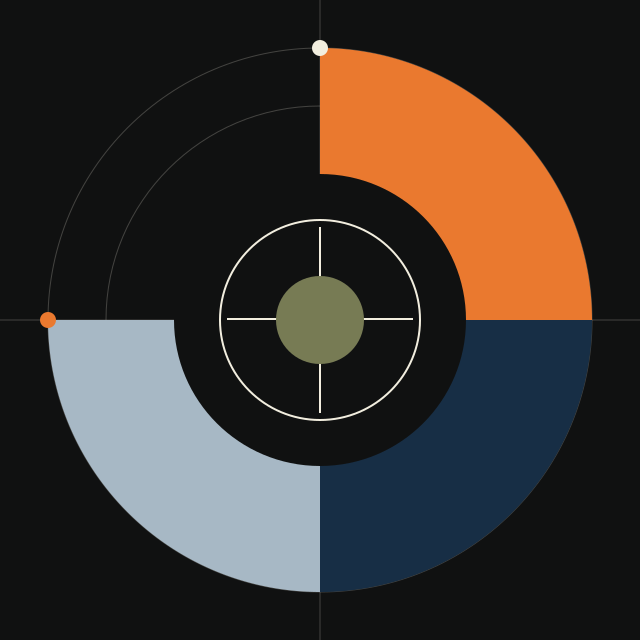
Four stages.
Each with its own outcome.
You know what you are hiring at each point, what you receive, and what is paid separately.
- 01
Initial conversation
Free
We confirm the need, the context and whether there is fit.
- What you want to solve and why now.
- How the process works today and which tools you use.
- Who decides and who will take part.
Outcome: A clear answer: direct proposal, assessment, or an honest no if we are not the right fit.
- 02
Process assessment
Paid service · for complex processes
We map the process to decide what to build and in which order.
- Process map, dependencies and systems involved.
- Priorities and scope for a first implementation.
- Success criteria and how they will be measured.
Outcome: Standalone deliverables you can use even if you implement with another provider.
- 03
Implementation
Per proposal
We build what was agreed, with reviews and tests.
- Written scope, milestones and exclusions before starting.
- Partial reviews with your team.
- Tests of normal cases and failures.
- Acceptance criteria approved by you.
Outcome: A working solution in the agreed scope, documented, with access under your company's name.
- 04
Operation & improvement
Optional · monthly
Monitoring, maintenance and support with explicit limits.
- What is monitored and how we notify you.
- What maintenance covers and what it does not.
- Agreed support channel and hours.
Outcome: Continuity for what already works. Expansions are quoted separately.
Websites
For a clearly scoped website
We impose no assessment or automation when the scope is simple and clear.
- 01Conversation
- 02Proposal
- 03Implementation
- 04Optional maintenance
What we separate in a proposal
Four concepts that never mix.
We do not publish fixed prices: they depend on scope, systems and volume. Each proposal details what falls under each concept.
Implementation
The work of designing, building, testing and launching what was agreed. Quoted per project.
Monthly operation
Monitoring, maintenance and support, only if a recurring service is useful to you.
Third-party licenses and usage
Tools, hosting, channels and services the solution uses. Paid separately, under your name.
New features
Anything outside the original scope. Quoted separately before building.
Operation and support
Support with written limits.
Support scope, channel and hours are agreed in each operation contract.
May include
- Handling failures in what we built, through the agreed channel.
- Minor adjustments defined in the operation contract.
- Adaptation to connected-tool changes, within what was agreed.
Does not include
- Unlimited changes.
- New features or processes.
- Third-party service failures themselves, though we help manage them.
- Support outside agreed hours and channel, unless hired.
What a delivery covers
Done means operable.
- 01Written scopeWhat is included, what is not, and what depends on third parties — before starting.
- 02Normal and failure testsWe test what should happen and what can go wrong.
- 03Acceptance criteriaAgreed with your team. Delivery is approved against them.
- 04Logs and alertsEvery run leaves a trace and failures notify an owner.
- 05Manual fallbackIf an external tool fails, the team knows how to keep operating.
- 06Documentation and accessHow to operate it, what depends on what, and credentials under your company's name.
- 07Recorded backlogWhat stayed out of scope, written down for later decisions.
Next step
Does your operation face a similar challenge?
The first conversation is free. We tell you which path makes sense, even if it is not us.